
LRS vs. Retekess vs. JTECH vs. VEVOR: 2026 Pager Cost, Range & Alternatives
TokenPager Team
Hospitality Tech & Queue Architecture
Key Insights
- •Commercial systems (LRS & JTECH) provide rugged shells and 1-2 mile line-of-sight RF range, but cost $900 to $1,800+ upfront with replacement pagers priced around $42 to $55 each.
- •Budget systems (Retekess & VEVOR) lower entry barriers ($72 to $299), but suffer from shorter battery lifespans, fragile plastic shells, and higher annual breakage in high-drop environments.
- •Regardless of brand, all physical buzzer systems suffer an average 15% to 25% annual shrinkage rate as patrons walk out with coasters in their pockets and vehicles.
- •Zero-hardware web pagers eliminate the $1,000+ hardware footprint, battery degradation, and charging dock clutter by streaming instant haptic vibration and audio alerts directly to guests' mobile browsers.
Pager Shrinkage Rate: The annual percentage of physical restaurant buzzers lost, stolen, or accidentally carried away by patrons (industry average: 15% to 25% per year), forcing operators to repeatedly purchase replacement units.
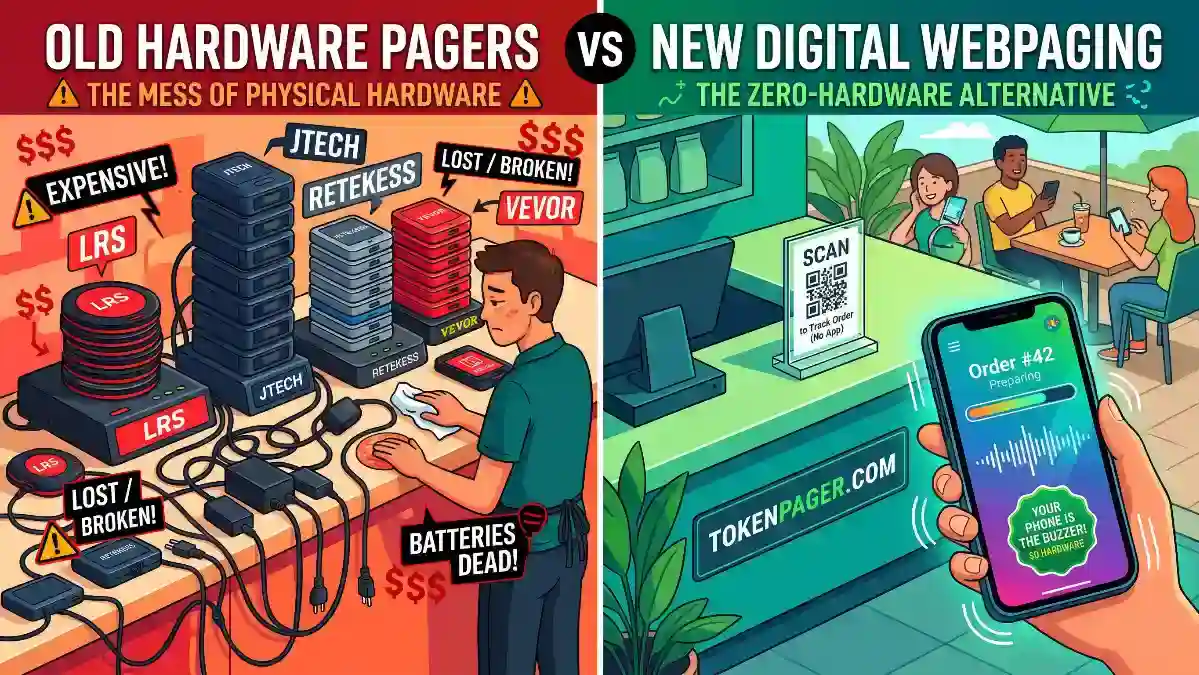
The 2026 Restaurant Pager Landscape: Enterprise vs. Budget vs. Cloud
If you operate a busy restaurant, food truck, or quick-serve cafe in 2026, managing customer wait times smoothly is vital to throughput and revenue. For decades, physical plastic coaster buzzers have been the default solution. Yet the hardware market today is sharply polarized between expensive enterprise stalwarts and ultra-cheap overseas imports.
When your existing base station fails or half your coasters go missing, you face a critical operational crossroad: do you spend over $1,200 to refresh an aging enterprise system, purchase a sub-$200 budget kit, or transition to a modern zero-hardware digital pager?
This in-depth 2026 guide breaks down the Big 4 hardware paging brands—LRS, Retekess, JTECH, and VEVOR—comparing upfront capital costs, real-world signal range, counter footprint, and hidden lifetime maintenance fees.
The Enterprise Heavyweights: LRS vs. JTECH
1. LRS (Long Range Systems) Pagers
Long Range Systems (LRS) invented the original coaster pager and remains an industry benchmark for corporate casual dining, hospitality resorts, and medical clinics. Models like the LRS Guest Pager Pro and RX-CS7 are engineered for continuous 12-hour shifts and survive thousands of accidental drops on ceramic tile.
Upfront Cost: Starter guest paging kits (typically 15 coaster pagers with transmitter base) begin around $914. Advanced multi-station kits, such as the Guest & Staff Connect ALPHA Gen2, range from $1,765 up to $5,820 for enterprise venues.
Replacement Costs: Individual replacement LRS coasters cost roughly $42 to $55 each.
Range: LRS transmitters operate on 459.80 MHz frequencies, delivering up to 1 mile in open line of sight. However, interior structural steel and masonry walls reduce indoor range to roughly 150–300 feet.
Best For: High-budget multi-story venues, hospital outpatient departments, and corporate dining chains requiring dedicated hardware support and high mechanical durability.
2. JTECH Pagers (an HME Company)
JTECH is LRS's primary enterprise rival, renowned for heavy-duty build quality and powerful radio-frequency transmitters. Flagship lines like JTECH GuestCall and the EXTREME Guest Notification System are engineered specifically for brutal high-volume kitchen environments.
Durability & Build: JTECH features reinforced rubberized bumpers and water-resistant casing designed to withstand grease, moisture, and repeated concrete impacts, backed by a 2-year manufacturer warranty.
Signal Range: Powered by 2-watt UHF frequencies (450–470 MHz), JTECH on-site transmitters achieve up to 2 miles in open air and feature active out-of-range audible alerts.
Upfront Cost: Complete commercial JTECH systems typically command $1,100 to $1,800+ depending on coaster count and charging tower configuration.
Best For: High-volume venues experiencing frequent pager breakage or operating across sprawling multi-acre outdoor patio properties.
The Budget Contenders: Retekess vs. VEVOR
3. Retekess Pagers (TD157, TD163, TD174)
For food trucks, coffee bars, and independent fast-casual restaurants, allocating $1,200 to guest pagers is financially unrealistic. Retekess has captured the mid-tier budget market by providing compact, stackable buzzer systems designed for small counters.
Upfront Cost: Highly competitive. Compact starter kits like the Retekess TD174 (10 pagers) retail around $119.99, while larger 16-to-20 pager kits like the Retekess TD157 and TD163 range between $189.99 and $299.99.
Signal Range: Retekess models utilize 433.92 MHz radio frequencies. Everyday units cover 300 to 500 meters in open areas, while specialized long-range models like the TD167F advertise up to 800 meters (2,624 feet).
Features: Space-saving vertical stacking towers, customizable front-panel brand stickers, and out-of-range notifications.
The Tradeoff: Lighter plastic shells make them more vulnerable to cracking on hard floors, and smaller lithium battery packs typically experience reduced charge capacity after 12 to 18 months.
4. VEVOR Restaurant Pagers
VEVOR operates as an aggressive discount equipment brand, frequently purchased directly or via Amazon for fast, low-cost deployments.
Upfront Cost: The most economical hardware option available, with 10-to-16 buzzer kits priced between $72.90 and $139.00.
Signal Range: Antenna-assisted transmitters offer a functional open-air perimeter of 300 to 400 meters.
The Catch: While VEVOR kits offer basic vibration, flashing LED, and buzzer alerts, they suffer from inconsistent battery longevity and thinner ABS plastic casings that frequently crack when dropped on outdoor pavement.
Head-to-Head Comparison: The Big 4 vs. TokenPager
The table below summarizes the operational specs and financial commitments required across the Big 4 hardware brands compared to modern zero-hardware web paging:
| Brand & System | Upfront Kit Cost | Replacement Per Pager | Signal Range | Counter Space Footprint |
|---|---|---|---|---|
| LRS Guest Pager Pro | $914 – $1,765 | $42 – $55 | ~1 Mile (Open Air) | Charging base + power brick |
| JTECH GuestCall | $1,100 – $1,800+ | $45 – $60 | ~2 Miles (UHF) | Multi-slot charging rack |
| Retekess TD157 / TD163 | $189 – $299 | $18 – $28 | 300m – 600m | Vertical stack tower |
| VEVOR Pager System | $72 – $139 | $12 – $20 | 300m – 400m | Base charger dock |
| TokenPager (Web PWA) | $0 Hardware | $0 (Runs on phone) | Unlimited (Cellular/Wi-Fi) | Single QR tabletop stand |
The Hidden Costs of Hardware: The Pager Shrinkage Tax
When evaluating restaurant pager costs, looking solely at the purchase invoice misses the largest operational expense: The Shrinkage Tax.
In busy hospitality venues, customers routinely slip plastic coasters into jacket pockets, handbags, or leave them on car dashboards. The hospitality industry averages a 15% to 25% annual pager shrinkage rate. In a busy 25-coaster venue:
• An LRS or JTECH operator repurchases 4 to 6 replacement discs every year at $45 to $55 each, quietly bleeding $200 to $330 annually in hardware upkeep alone.
• Over a 3-year operating window, the true Total Cost of Ownership (TCO) of a $1,200 commercial pager kit exceeds $2,100 once replacements, damaged charging pins, and battery degradation are accounted for.
Use our interactive TCO calculator below to compute your venue's exact 3-year equipment losses based on your fleet size and supplier tier.
Why Food Trucks & Modern Cafes Are Ditching Hardware Pagers
1. The 15-Foot Kitchen: Counter Space Constraints
Inside a mobile food truck or compact espresso bar, counter real estate directly dictates order assembly speed. A traditional 20-slot charging tower and its bulky power supply consume roughly 1.5 to 2 square feet of counter space. By replacing the hardware tower with a single laminated QR stand, food truck operators reclaim crucial staging space.
2. Generator Noise vs. Pocket Vibration
At outdoor festivals, blaring 6500-watt diesel generators and crowd noise easily drown out audio buzzer beeps. When guests step away to explore adjacent vendor booths, they miss their page. Because TokenPager alerts customers directly on their personal smartphones with native vibration motors and lock-screen alerts, patrons feel the call in their pocket regardless of background noise.
3. Zero Device Sanitization
Handing sticky, grease-stained plastic buzzers between hundreds of patrons requires constant sanitization wipes. Shifting queue notifications to customer smartphones creates a 100% contactless, touch-free workflow.
The Modern Zero-Hardware Solution: TokenPager
The most reliable, high-resolution pager on earth is already sitting in your customer's pocket—their smartphone.
TokenPager replaces physical coaster buzzers with an instant, browser-based Progressive Web App (PWA). Customers scan a counter QR code or receipt, open their live waiting token in Safari or Chrome, and receive real-time notifications when their order is ready.
• Zero App Downloads: Customers never visit the App Store or Google Play.
• Zero Phone Numbers: Protects diner privacy with 100% anonymous queuing.
• Unlimited Cellular Range: Guests can wait comfortably in their vehicles or stroll adjacent avenues without out-of-range radio disconnects.
• Interactive Wait-Screen Upselling: Transform idle waiting minutes into extra revenue by showcasing drink specials, chef picks, or social media links.
Test the virtual buzzer right on your own device below to experience what your customers feel when their order is called.
Hardware Pagers vs. Zero-Hardware Web Paging at a Glance
Upfront Investment
$72 (VEVOR) to $1,800+ (JTECH/LRS) for proprietary charging bases and plastic discs vs. $0 with TokenPager.
Effective Operating Range
400m to 1 mile through open air, but blocked by concrete walls and parking lots vs. unlimited cellular coverage.
Counter & Power Footprint
16 to 30-slot charging towers with power bricks eating register counter space vs. a single 4x6 table QR stand.
Ongoing Maintenance & Loss
15-25% annual disc replacement costs and battery aging vs. zero hardware maintenance or replacements.
Physical Buzzer vs. Digital Pager Cost Calculator
Calculate the hidden 3-year Total Cost of Ownership of plastic coaster pagers vs. zero-hardware digital paging.
Dock + 20 starters
12 pucks + batteries
Total spent on physical buzzers, ongoing replacements, shipping fees, and battery maintenance over 3 years.
Try It: Test The Virtual Buzzer Right Now
Experience what your guests feel when their order is ready. No app install required.

Downtown Artisan Kitchen
— powered by TokenPager.com
Virtual Pager Active
This screen buzzes & chimes when your order is called.
Haptics & Audio ReadyCold Brew Refill +$2
Turn idle wait times into immediate counter upsells
Tap to test instant vibration & chime!
How The Virtual Buzzer WorksTest The Virtual Buzzer Right Now
When your counter staff calls a token, your guest's phone instantly wakes up:
- ✓Fires native haptic vibration in their pocket or hand
- ✓Sounds a clean dual-tone chime so they never miss pickup
- ✓Paints the screen emerald green with their pickup token
- ✓Zero app downloads and zero phone numbers needed
Deploy TokenPager in 5 Minutes
Turn customer waiting into a positive, branded experience. Zero hardware costs, zero app downloads, and no phone numbers required.
Keep Learning
View AllWaitwhile Alternatives & Pricing: The Hidden Cost of SMS Limits (2026)
A transparent 2026 breakdown of Waitwhile pricing, visitor caps, and SMS credit auto-refills. Compare top waitlist alternatives and explore zero-SMS web paging.
The Science of In-Venue Upselling: Turning Wait Screens into Revenue
Discover why post-purchase wait time delivers 10x higher upselling conversion than high-pressure register checkouts, and how digital wait screens lift average order value.
Turning Wait Times into Repeat Customers with Social Media
Convert idle customer waiting minutes into permanent Instagram followers, direct repeat bookings, and recurring revenue using interactive mobile wait screens.
Frequently Asked Questions
Common questions regarding this guide and modern paging workflows.